



News
How to Choose a Long Battery Asset GPS Tracker for Container Shipping

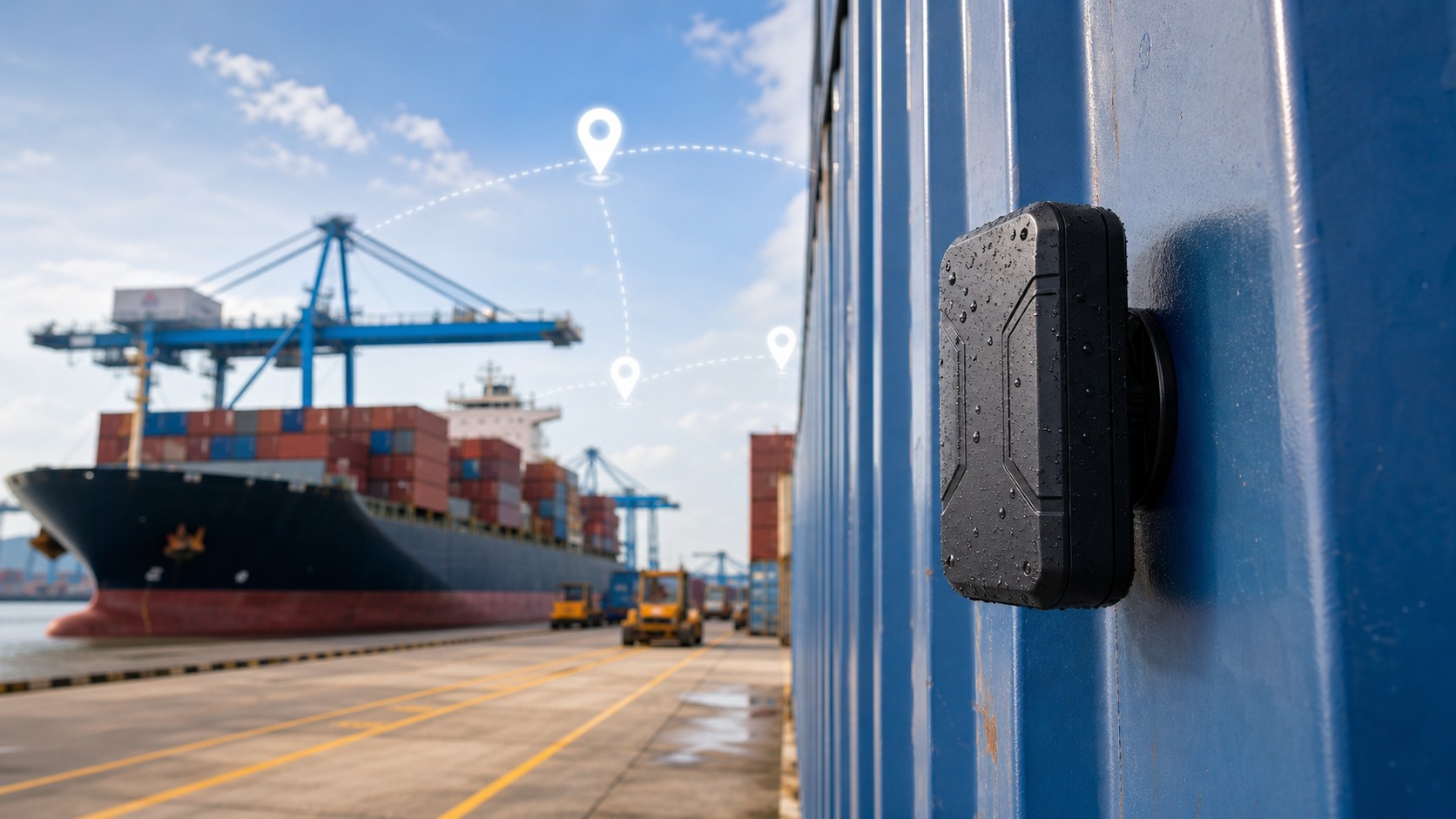
For logistics companies, container operators, IoT distributors, and asset tracking solution providers, container visibility is no longer optional. Long-distance shipping often involves ports, warehouses, trailers, vessels, and cross-border transport routes where power supply is unavailable and manual inspection is costly.
A long battery asset GPS tracker helps buyers monitor container movement, reduce asset loss, improve delivery transparency, and support better fleet or cargo management. For B2B buyers, the right choice depends on battery life, 4G network compatibility, magnetic installation, waterproof design, platform integration, and supplier customization capability.
This guide explains what procurement managers, logistics companies, and GPS tracker distributors should check before choosing a long battery asset GPS tracker for container shipping projects.
Why Container Shipping Needs a Long Battery Asset GPS Tracker
Container tracking is different from regular vehicle tracking. A vehicle GPS tracker can usually connect to the vehicle battery, but a container normally has no stable power source. This means the tracker must rely on its own internal battery for weeks or months.
For container shipping, a long battery asset tracker is useful in several scenarios:
| Use Case | Why It Matters |
|---|---|
| Sea freight container monitoring | Track container location during long international shipping cycles |
| Trailer and cargo asset tracking | Monitor containers when moved between ports, warehouses, and logistics yards |
| High-value goods protection | Reduce risk of theft, route deviation, or unauthorized movement |
| Rental container management | Help operators know where each container is deployed |
| Cross-border logistics | Improve visibility across multiple transport stages |
For B2B projects, buyers should not only ask "How long is the battery life?" They should ask how the battery performs under real tracking intervals, network conditions, temperature changes, and reporting frequency.
Key Specifications to Check Before Buying
A professional 4G asset GPS tracker should be evaluated from both hardware and project deployment perspectives.
| Specification | What B2B Buyers Should Check |
|---|---|
| Battery Capacity | Larger capacity supports longer standby and tracking cycles |
| Positioning System | GPS, BDS, GLONASS, or multi-GNSS support improves location reliability |
| Network | 4G LTE is preferred for global deployment and long-term network support |
| Waterproof Rating | IP65/IP67 or higher is recommended for outdoor container environments |
| Installation | Magnetic mounting is ideal for fast, non-wired deployment |
| Reporting Interval | Adjustable upload frequency helps balance battery life and visibility |
| Platform Compatibility | Check whether the device supports your tracking platform or protocol |
| Working Temperature | Important for sea freight, cold chain, and outdoor logistics yards |
| Alerts | Movement alert, vibration alert, geo-fence, low battery alert, removal alert |
| Certification | CE, FCC, RoHS, or regional certifications may be required by importers |
For container tracking, battery life is closely connected to upload frequency. A tracker reporting every 10 minutes will consume much more power than one reporting once per day. Buyers should ask suppliers to provide battery life estimates under different reporting modes.
Magnetic Asset Tracker vs Standard GPS Tracker
Many regular GPS trackers are designed for cars, motorcycles, or personal use. Container shipping requires a different product logic.
| Comparison | Magnetic Asset GPS Tracker | Standard GPS Tracker |
|---|---|---|
| Power Source | Built-in long-life battery | Often wired or small battery |
| Installation | Magnetic, no wiring needed | May require wiring or manual placement |
| Main Use | Container, trailer, cargo, equipment | Vehicle, personal, pet, motorcycle |
| Deployment Speed | Fast for bulk projects | Slower if installation is required |
| Battery Life | Designed for long standby | Usually shorter |
| Suitability for Containers | High | Limited |
A magnetic GPS tracker for container tracking allows operators to deploy devices quickly without modifying the container. This is especially important for rental containers, temporary cargo projects, or logistics companies managing large numbers of assets.
Why 4G Network Support Matters
Many older asset trackers still use 2G or 3G networks. However, 2G and 3G shutdowns have already happened in many markets, and more regions continue to reduce legacy network support.
For international B2B buyers, 4G asset GPS trackers are usually a safer choice because they offer:
| Benefit | Value for Buyers |
|---|---|
| Better long-term network availability | More suitable for global logistics projects |
| Faster data transmission | Supports reliable location and alert updates |
| Wider deployment options | Works better for distributors selling to multiple countries |
| Stronger product lifecycle | Reduces risk of devices becoming obsolete too soon |
Before bulk purchasing, buyers should confirm the supported LTE bands for target countries. A professional GPS tracker manufacturer should be able to recommend the right 4G module version based on the buyer's market.
OEM/ODM Customization Points for B2B Buyers
For IoT distributors, fleet management solution providers, and logistics technology companies, OEM/ODM capability is often as important as the hardware itself.
When choosing an asset GPS tracker supplier, ask whether they support:
| Customization Item | Why It Matters |
|---|---|
| Custom Firmware | Match project reporting logic, alerts, and power-saving strategy |
| Platform Protocol Integration | Connect the device to your own tracking platform |
| Logo Branding | Useful for distributors and private label projects |
| Packaging Customization | Helps build a professional local sales channel |
| SIM/APN Configuration | Speeds up deployment in target markets |
| Tracking Interval Settings | Balances battery life and monitoring frequency |
| Alert Logic Customization | Adapts to container, trailer, or cargo use cases |
For bulk wholesale orders, clear customization communication can reduce deployment problems after shipment.
Questions to Ask Your Asset GPS Tracker Supplier
Before requesting a quotation, prepare a clear project brief. This helps the manufacturer recommend the right model and battery configuration.
| Question | Why You Should Ask |
|---|---|
| What is the estimated battery life at different upload intervals? | Avoid unrealistic battery expectations |
| Which 4G LTE bands does the device support? | Confirm compatibility in target countries |
| Does the tracker support magnetic mounting? | Important for container and trailer deployment |
| What waterproof rating does the device have? | Needed for outdoor and sea freight environments |
| Can the firmware be customized? | Useful for OEM/ODM and platform projects |
| Can it connect to our tracking platform? | Critical for IoT distributors and solution providers |
| What is the MOQ for OEM orders? | Helps plan procurement and resale |
| Are samples available before bulk order? | Reduces purchasing risk |
| What certifications are available? | Important for customs clearance and local sales |
Buyer Checklist for Container GPS Tracker Projects
| Checklist Item | Requirement |
|---|---|
| Product Type | 4G long battery asset GPS tracker |
| Main Application | Container, trailer, cargo, logistics asset monitoring |
| Installation | Strong magnetic mounting preferred |
| Battery | Long standby with configurable reporting interval |
| Network | 4G LTE bands matched to target market |
| Waterproof | Outdoor-ready housing, preferably IP65/IP67 |
| Platform | Compatible with buyer's tracking system |
| Customization | OEM/ODM firmware, logo, packaging, protocol support |
| Supplier Type | GPS tracker manufacturer or experienced B2B supplier |
| Purchase Flow | Sample testing before bulk wholesale order |
FAQ
How long can a battery asset GPS tracker work for container shipping?
Battery life depends on battery capacity, upload interval, network signal, working temperature, and device power-saving strategy. For container shipping, buyers should ask the supplier for battery life estimates under different reporting intervals.
Can a magnetic GPS tracker be used on shipping containers?
Yes. A magnetic GPS tracker is suitable for quick installation on metal container surfaces, trailers, and logistics assets without wiring. It is useful for temporary deployment, rental containers, and bulk logistics monitoring projects.
Do you support OEM firmware for asset GPS trackers?
ALL WAY TECHNOLOGY supports OEM/ODM customization, including firmware configuration, platform protocol, logo branding, packaging, SIM/APN settings, and tracking interval adjustment.
Which 4G bands are needed for international container tracking?
The required 4G LTE bands depend on the target country or region. Before bulk wholesale orders, buyers should confirm deployment markets so the GPS tracker manufacturer can recommend the correct module version.
Can I test samples before bulk wholesale orders?
Yes. For B2B procurement, sample testing is recommended before bulk orders. Buyers can test battery life, 4G connectivity, magnetic installation, tracking accuracy, platform compatibility, and alert performance.
Conclusion
Choosing a long battery asset GPS tracker for container shipping is not only about finding a device with a large battery. B2B buyers need to evaluate the full deployment scenario, including container environment, reporting interval, 4G network bands, magnetic installation, waterproof design, platform compatibility, and OEM/ODM support.
For logistics companies, IoT distributors, and container operators, working with an experienced GPS tracker manufacturer can make product testing, customization, and bulk deployment much smoother.
Looking for a 4G long battery asset GPS tracker for container shipping?
Contact ALL WAY TECHNOLOGY to request specifications, sample pricing, and OEM/ODM customization options.

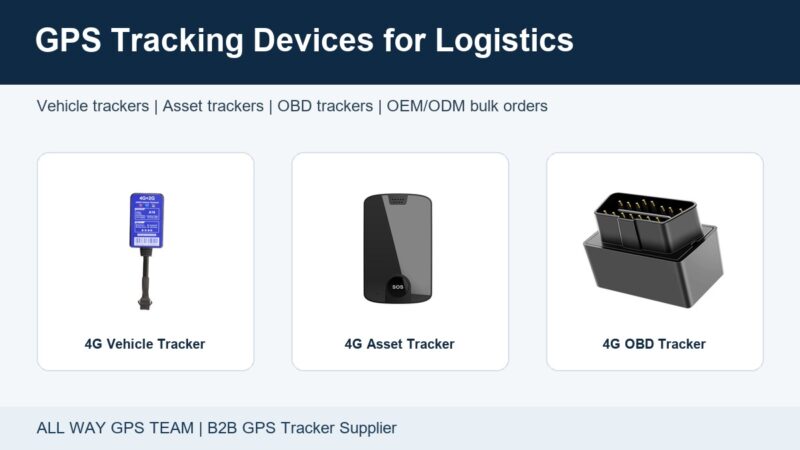

 Vehicle GPS Tracker
 Asset GPS Tracker
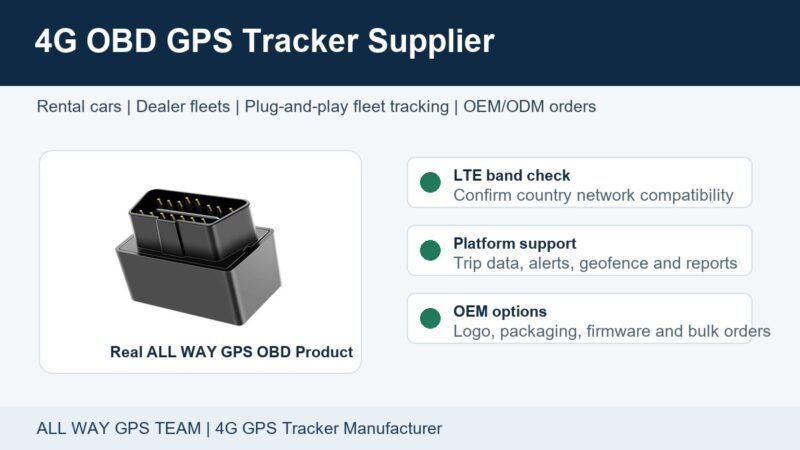
 OBD GPS Tracker
 Pet GPS Tracker
 Tag Tracker