



News
GPS Tracker OEM vs ODM: What Distributors Should Confirm Before Bulk Orders

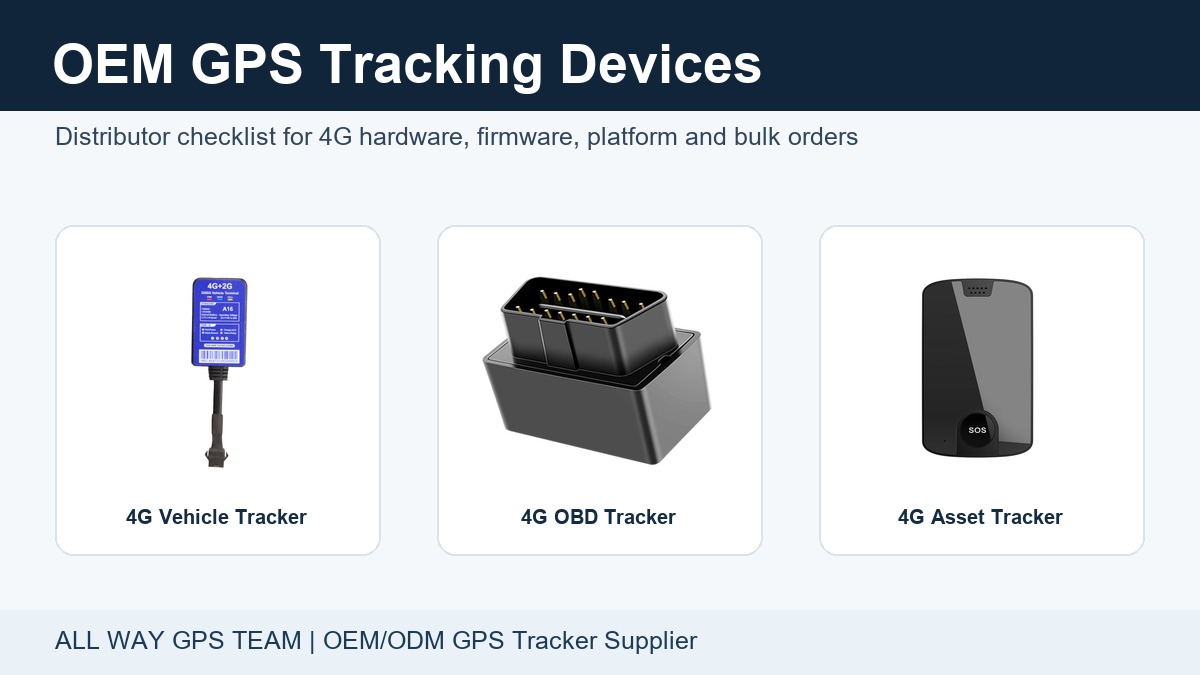
For GPS tracker distributors, fleet solution providers and IoT resellers, OEM and ODM cooperation can look similar at first. Both may include logo, packaging, firmware settings and bulk supply. But for a real B2B purchasing project, the difference matters. OEM is usually closer to private label production based on an existing device, while ODM may involve deeper hardware, firmware or enclosure customization.
This checklist explains what distributors should confirm before ordering GPS tracker OEM or ODM products, especially when the project includes 4G vehicle trackers, asset trackers, OBD trackers, private label branding, platform integration or regional LTE band requirements.
1. Define Whether You Need OEM or ODM
Before comparing suppliers, clarify how much customization your project really needs. Many distributors do not need a new product design at the beginning. They may need a stable GPS tracker model with custom logo, label, packaging, firmware parameters and server settings. That is often an OEM project.
ODM becomes more relevant when your project needs changes to hardware layout, battery configuration, casing design, accessory set, protocol behavior or other product-level features. ODM usually requires more engineering confirmation, sample validation and production planning.
2. Confirm the Product Category First
A strong OEM or ODM plan starts with the right product category. A distributor selling to fleet customers may need wired 4G vehicle GPS trackers. A logistics customer may need magnetic asset trackers for containers or trailers. A rental car business may prefer plug-and-play OBD trackers.
- Vehicle GPS tracker: fleet management, logistics vehicles, anti-theft monitoring and relay control projects.
- Asset GPS tracker: containers, trailers, equipment, cargo and long standby tracking projects.
- OBD GPS tracker: rental cars, dealer fleets and plug-and-play vehicle tracking projects.
- PCBA or module projects: deeper integration for device builders or platform solution providers.
3. Check LTE Bands Before Sample Orders
Network compatibility is one of the most common problems in GPS tracker OEM projects. Before ordering samples, provide the target country or region and ask the supplier to confirm suitable 4G LTE bands, SIM card requirements and any regional hardware version differences.
If you sell to multiple markets, ask whether one device version can cover your main countries or whether separate SKUs are safer. This helps reduce after-sales risk when distributors supply different customers from one inventory.
4. Review Firmware, Protocol and Platform Requirements
Firmware configuration is often more important than branding. A GPS tracker may need default server IP, APN settings, reporting interval, alarm logic, sleep mode behavior, protocol format and command response settings. If your customer already has a GPS tracking platform, protocol compatibility should be tested before bulk orders.
Ask the supplier whether they can provide protocol documentation, sample devices, server configuration guidance and firmware parameter support. For distributor projects, this can save weeks of troubleshooting after delivery.
5. Confirm Branding, Packaging and Label Details
OEM GPS tracker orders often include private label branding. Before production, confirm logo placement, product label content, IMEI or serial number format, packaging artwork, user manual language, accessory list and carton label requirements.
For smaller first orders, distributors can start with simple label and packaging customization. For mature markets or repeat customers, more complete OEM packaging may make the product easier to sell and support.
6. Test Samples Like a Real Customer Project
Sample testing should not stop at checking whether the device powers on. Distributors should test the device in the same way their customers will use it.
- GPS positioning and route playback.
- 4G LTE connection stability in the target market.
- Platform data reporting and alert display.
- Battery behavior or sleep mode when relevant.
- ACC, power cut, vibration, geofence or relay alerts when needed.
- Firmware settings after reboot and long running tests.
7. Ask About MOQ, Lead Time and Repeat Supply
For GPS tracker OEM and ODM projects, MOQ and lead time depend on customization depth. A simple logo or packaging project may be faster than a firmware or hardware modification project. Buyers should confirm sample schedule, production lead time, packaging timeline and repeat supply plan before promising delivery to end customers.
For distributors, repeat order stability is often more important than a low first-order price. A reliable GPS tracker supplier should support documentation, sample testing, production consistency and after-sales communication.
Recommended Product Direction
For private label fleet projects, start with the 4G Vehicle GPS Tracker for Fleet Management. For logistics and cargo monitoring projects, compare the AW09A Magnetic 4G Asset GPS Tracker. For rental and dealer fleet projects, review the 4G OBD GPS Tracker.
Distributors can also browse the GPS tracker product catalog or read the OEM GPS tracking devices distributor checklist before confirming sample models.
FAQ
What is the difference between GPS tracker OEM and ODM?
OEM usually means private label customization based on an existing GPS tracker model, while ODM may involve deeper hardware, firmware, enclosure or product-level customization.
Can distributors start with samples before bulk orders?
Yes. Distributors should test samples for LTE connection, GPS positioning, platform reporting, alert logic, firmware settings and installation workflow before bulk orders.
What information should I provide for an OEM GPS tracker quotation?
Useful information includes target country, product type, expected quantity, LTE band requirements, platform protocol, branding needs, packaging requirements and application scenario.
Does ALL WAY GPS support GPS tracker OEM and ODM projects?
ALL WAY GPS supports qualified B2B OEM/ODM projects, including firmware settings, logo, label, packaging, sample testing and bulk order support.
Planning a GPS tracker OEM or ODM project? Contact ALL WAY GPS with your target market, device type, platform requirements and estimated order quantity.
 Vehicle GPS Tracker
 Asset GPS Tracker
 OBD GPS Tracker
 Pet GPS Tracker
 Tag Tracker